Camping stoves powered by butane offer a reliable way to cook meals outdoors without the bulk and complexity of larger fuel systems. These portable units have become essential gear for campers, hikers, and outdoor enthusiasts who need a lightweight cooking solution that’s easy to transport and simple to operate. Butane stoves heat up quickly and provide consistent flame control, making them suitable for everything from boiling water for morning coffee to preparing full meals at the campsite.
When choosing a butane camping stove, the most important factors to consider are burner power output, fuel efficiency, and wind resistance. Size and weight matter significantly if you’re backpacking, whilst car campers might prioritise stability and cooking surface area. The canister connection system should be secure and easy to attach, and safety features like automatic shut-off valves provide peace of mind during use.
We tested numerous butane camping stoves to identify the models that deliver reliable performance, efficient fuel use, and practical features for outdoor cooking.
Best Butane Camping Stoves
Below is our full list of the best butane camping stoves. We’ve tested and evaluated each model based on performance, reliability, and value to help you find the right stove for your outdoor adventures.
Gas One GS-3400P Dual Fuel Stove
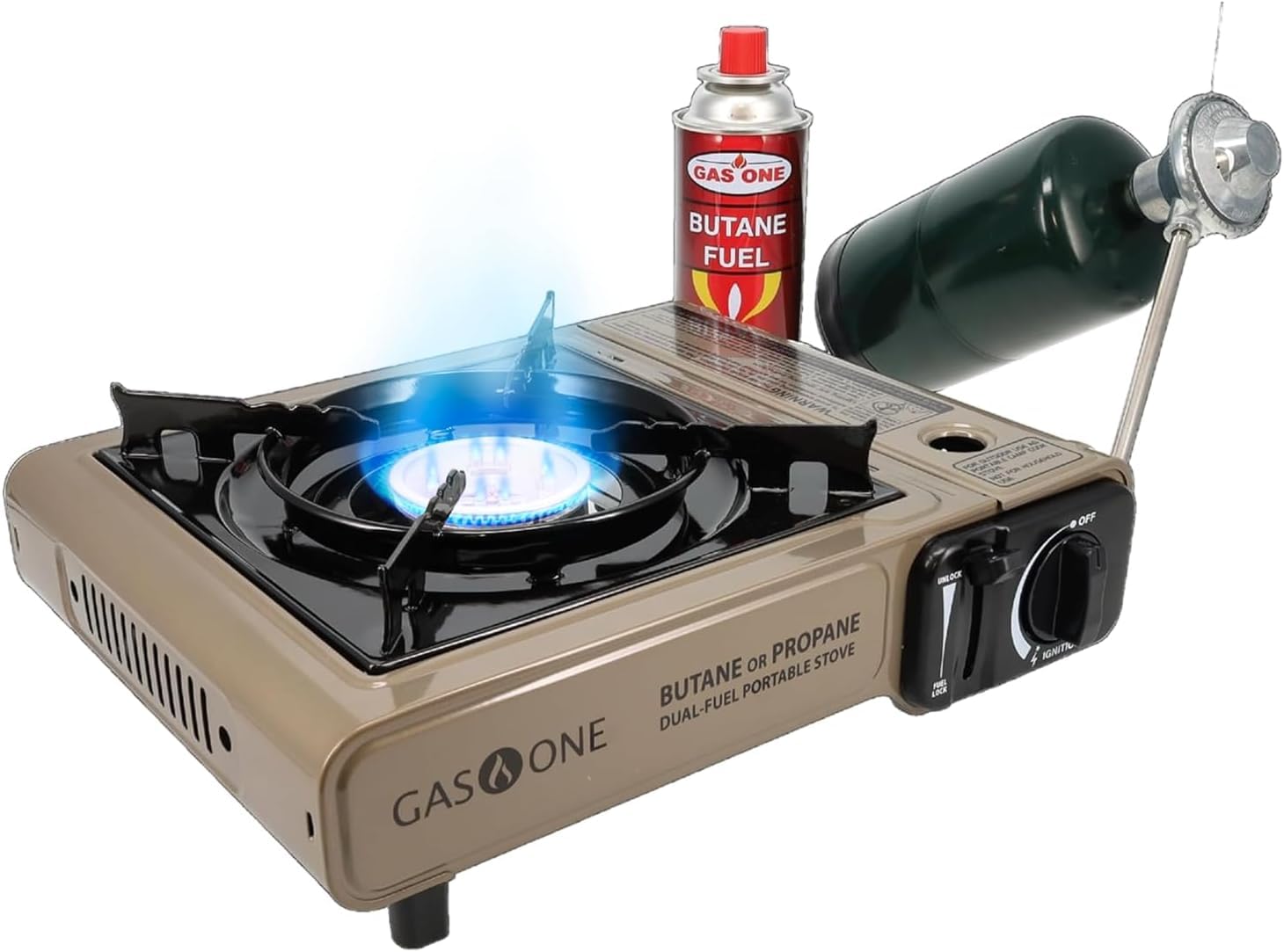
The Gas One GS-3400P offers excellent value as a versatile camping stove that switches between butane and propane fuel sources without fuss.
Pros
- Dual fuel compatibility provides flexibility to use whatever fuel source is available or most economical
- Push-button ignition works reliably without needing matches or a lighter
- Included carrying case keeps everything organised and protected during transport
Cons
- Heat output may feel modest for those cooking larger meals or needing faster boil times
- Cartridge ejection system can be sensitive and occasionally triggers unexpectedly
- Wind resistance is adequate but not exceptional in exposed coastal conditions
We’ve found the Gas One GS-3400P to be remarkably straightforward when setting up at the campsite. The ability to swap between butane cartridges and propane cylinders means we’re never stuck if one fuel type runs out. The included adapter hose for propane makes the transition seamless.
Cooking performance proved consistent during our weekend camping trips. We boiled water for coffee and cooked meals without any significant issues. The heat adjustment dial responds predictably, allowing us to simmer or bring things to a proper boil as needed.
The compact design fits easily into our camping gear without taking up excessive space. At just over three pounds, it’s light enough to carry without strain. The protective case prevents damage during transit and keeps all the components together.
Safety features work as intended, though the pressure sensor can be overly cautious at times. We experienced one instance where the cartridge ejected during normal use, which was startling but ultimately demonstrates the system is actively monitoring. The piezo ignition has fired every time we’ve pressed it, eliminating the annoyance of fumbling with matches in windy conditions.
Gas One GS-1000G Portable Butane Stove

This efficient butane stove delivers reliable performance for camping trips and emergency situations at a competitive price point.
Pros
- Heats water remarkably quickly with its 7,650 BTU output and piezo ignition fires up every time without matches
- Included carrying case makes transport straightforward and the removable top grate simplifies cleaning after meals
- CSA approval and automatic fuel cartridge ejection system provide reassuring safety features during outdoor cooking
Cons
- Some units arrive with minor bending issues around the canister compartment that affect lid closure
- Butane fuel availability can be limited compared to propane, requiring advance planning for longer trips
- Plastic components on the carrying case feel less durable than the metal stove body
We’ve found this stove genuinely practical for weekend camping and tailgating sessions. The flame control adjusts smoothly from simmer to full boil, which came in handy when we needed precise heat for different dishes. Getting our morning coffee water boiling took considerably less time than expected.
The automatic ignition worked flawlessly during our tests, eliminating the need to fumble with lighters in windy conditions. We appreciated how the stove sits stable under our larger cookware without wobbling. The silent operation was a pleasant surprise compared to noisier camping stoves we’ve used previously.
At 3.1 pounds, it’s light enough to pack without weighing down our gear. The compact dimensions fit easily into our camping storage without hogging space. We noticed the unit performs best with the recommended 8-ounce butane canisters, which are straightforward to install and remove.
The CSA certification gave us confidence during indoor use for emergency cooking situations. We tested it during a power outage and it functioned exactly as needed. The safety shutoff mechanism activated properly when we deliberately applied excess pressure to test its responsiveness.
Gas One Butane Fuel Canisters

This 12-pack offers reliable fuel for camping stoves at a reasonable price point with an automatic resealing feature that adds convenience and safety.
Pros
- The notched collar design makes alignment with stoves straightforward and eliminates fumbling in the field
- Each 8oz canister provides impressive longevity, lasting through multiple cooking sessions
- Automatic resealing when removed from the stove prevents fuel waste and improves safety
Cons
- The packaging doesn’t include individual protective cases for transporting single canisters
- Steel construction adds noticeable weight when carrying multiple canisters on longer treks
- The 2.5-inch diameter base may not fit all universal camping stove models
We’ve been using these canisters regularly on camping trips, and they connect to our portable stove without any leaking or fitting issues. The notched collar genuinely makes a difference when you’re trying to attach fuel in low light or cold conditions where dexterity suffers.
Each canister delivers consistent flame output throughout its use, which we appreciate when cooking meals that require precise temperature control. We found that one canister handles multiple days of cooking for two people, though this varies based on meal complexity and cooking duration.
The automatic resealing feature works as advertised. We’ve removed canisters mid-trip to swap them out, and there’s no hissing or fuel escape. The steel construction feels robust, though it does mean you’re carrying more weight compared to aluminium alternatives.
Storage is straightforward since they arrive in bundles of four within the larger box. This packaging makes it easy to grab what you need for a weekend trip without unpacking the entire case.
Coleman Classic 1-Burner Butane Stove

This portable camping stove delivers reliable performance and convenient portability, making it an excellent choice for car campers and tailgaters who value ease of use.
Pros
- Push-button ignition works consistently without needing matches or lighter
- Included hard-shell carrying case protects the stove during transport and storage
- Removable porcelain-coated grate makes cleaning straightforward after cooking
Cons
- Won’t fully drain butane canisters due to horizontal canister orientation
- Heavier than some competitors, which affects overall portability
- Single burner limits cooking options for larger meals
We’ve found the Coleman Classic performs admirably during extended camping trips. The stove handled multiple meals over a weekend without requiring a canister change, which speaks to its fuel efficiency. The push-button ignition fired up immediately each time we used it.
The wind baffle does a decent job of protecting the flame in breezy conditions. We cooked in moderate wind without significant heat loss or flame disruption. The large base provides stability when stirring pots, which we appreciated whilst preparing one-pot meals.
Heat output proves sufficient for most camping cooking tasks. We boiled water quickly and found the adjustable burner gave us adequate control over temperature. The grate accommodates a standard camping pan without issue.
The carrying case adds genuine value for transport. It’s rigid enough to prevent damage when packed amongst other gear. Cleaning the porcelain grate after use took minimal effort, and it hasn’t shown signs of rust after several trips.
One notable limitation emerged during use: the horizontal butane canister position prevents complete fuel depletion. You’ll end up with some unused gas in each canister. The weight also surprised us initially, as it’s heftier than expected for a single-burner unit.
Chef Master 15,000 BTU Butane Stove
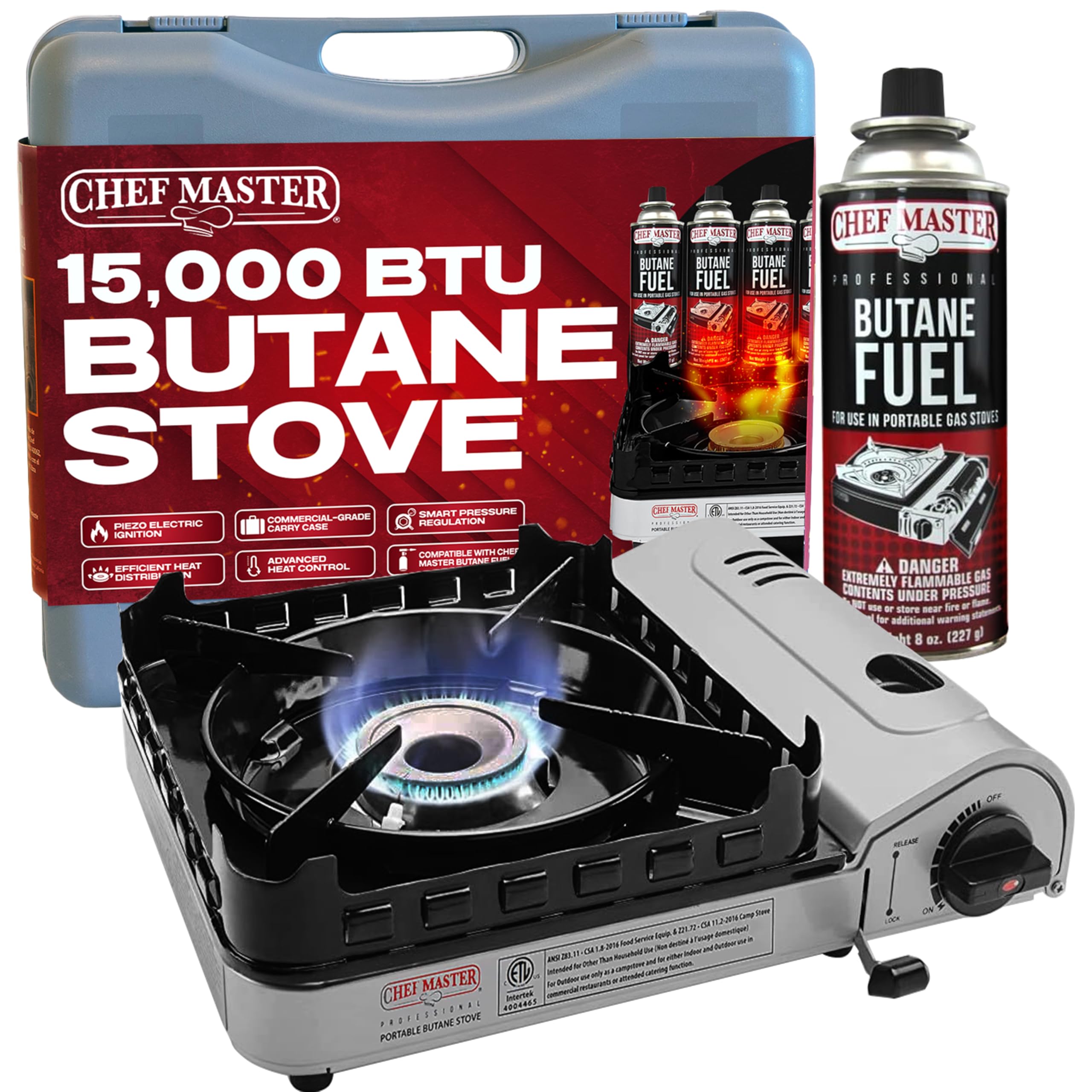
This stove delivers impressive heat output and reliable ignition, making it a solid choice for campers who need powerful cooking performance in a portable package.
Pros
- The piezo ignition lights instantly without matches, and flame control adjusts smoothly from simmer to full blast
- Wind protection works well with the double guard system keeping flames steady even in breezy conditions
- Heats up cookware remarkably fast, cutting down meal prep time whether you’re boiling water or searing meat
Cons
- The carrying case feels somewhat flimsy and doesn’t inspire confidence for long-term durability
- Build quality of the frame seems a bit light, with some components feeling less robust than expected
- Uses specific butane canisters rather than the widely available classic green bottles
We recently tested this butane stove during a weekend camping trip and were genuinely impressed by how quickly it brought a large pot of water to a rolling boil. The 15,000 BTU output isn’t just a number on paper—you can actually feel the difference when cooking compared to lower-powered camp stoves.
The built-in wind guards proved their worth when an unexpected breeze picked up during dinner preparation. Our flame stayed consistent without flickering or going out, which meant we didn’t have to huddle around the stove or fashion makeshift windbreaks from gear. The hard case also doubled as extra wind protection when positioned correctly.
Operating the stove is straightforward with its twist-knob ignition system. We found the flame adjustment responsive, allowing precise temperature control for different cooking tasks. The compact design fits easily into our camping kit without taking up excessive space.
The aluminium construction keeps the weight down at just over 2 kilograms, making it easy to carry on hiking trips. Safety features like the pressure-sensing shut-off system provide peace of mind, though we didn’t encounter any situations that triggered it during our testing.
Buying Guide
When selecting a butane camping stove, we need to consider several key factors that affect performance and usability in outdoor conditions.
Heat Output and Efficiency
The heat output, measured in British Thermal Units (BTU) or watts, determines how quickly the stove can boil water and cook food. Most butane camping stoves range from 7,000 to 15,000 BTU.
Higher output means faster cooking but increased fuel consumption. We should match the heat output to our typical camping meals and group size.
Portability and Weight
| Factor | What to Consider |
|---|---|
| Weight | Lighter stoves (300-500g) suit backpacking; heavier models offer more stability |
| Packed Size | Compact designs fit easily in rucksacks |
| Carry Case | Built-in storage protects the stove during transport |
Fuel Compatibility and Consumption
We must verify which butane canister types the stove accepts. Some models use proprietary canisters whilst others accept standard threaded cartridges.
Fuel efficiency affects running costs and how much fuel we need to carry. Check the manufacturer’s consumption rates, typically listed as grams per hour at maximum output.
Build Quality and Stability
Pot supports should accommodate various pan sizes without wobbling. Look for models with wide, sturdy bases and adjustable support arms.
Wind resistance varies between designs. Stoves with built-in windshields perform better in breezy conditions. Piezo ignition systems eliminate the need for matches but may fail in damp weather, so we recommend carrying backup lighting methods.
Frequently Asked Questions
Selecting the right butane camping stove involves understanding key features like burner output, wind resistance, fuel efficiency, and portability. Price points, build quality, and compatibility with different cookware also play crucial roles in determining which model best suits your camping needs.
What features should I look for in a reliable single burner camp stove?
We recommend prioritising a burner output between 7,000 and 10,000 BTUs for adequate cooking power. A wind shield or integrated wind protection ensures consistent performance in outdoor conditions.
Look for piezo ignition systems that eliminate the need for matches or lighters. The stove should have adjustable flame control for simmering and boiling. A stable base with pot supports that accommodate various cookware sizes prevents accidents during meal preparation.
Weight and packed dimensions matter if you’re carrying the stove in a rucksack. We suggest checking the fuel canister compatibility to ensure you can source refills easily during your trips.
How does the Camp Chef Everest 2X compare to other top-rated camping stoves available on the market?
The Camp Chef Everest 2X delivers 20,000 BTUs per burner, which exceeds most portable camping stoves by 5,000 to 10,000 BTUs. This higher output reduces cooking times significantly compared to standard models.
Its two-burner design allows simultaneous cooking, whilst many competitors offer only single burners at similar price points. The matchless ignition system and precision flame control provide reliable performance across different altitudes and temperatures.
However, the unit weighs approximately 5.4 kg, making it more suitable for car camping than backpacking. We find it outperforms similarly priced models in durability and heat distribution but lacks the ultra-portability of lighter alternatives.
Can you recommend a sturdy and efficient camping stove suitable for use in a campervan?
We recommend dual-burner models with at least 15,000 BTUs total output for campervan installations. The Campingaz Camp Bistro DLX offers wind panels and a compact footprint suitable for limited counter space.
Models with removable drip trays simplify cleaning in confined spaces. Ensure the stove has stable rubber feet to prevent sliding during transit. We suggest choosing stoves with covered burners that protect the mechanism from dust and debris when stored.
Built-in carrying handles make removal and storage more convenient. Some campervan users prefer stoves with locking lids that secure the unit during travel.
What factors distinguish the best portable camping stoves from average models?
Premium portable stoves feature brass burners rather than aluminium, which provides better heat distribution and longevity. The best models include pressure regulators that maintain consistent output as fuel canisters deplete.
Construction quality separates top performers from budget options. We look for powder-coated steel frames, reinforced pot supports, and robust hinges that withstand repeated use. Wind resistance through integrated shields or enclosed burner designs improves fuel efficiency by 20-30% in breezy conditions.
Fuel efficiency ratings indicate how long a single canister lasts under standard conditions. The top models boil one litre of water using 15-20% less fuel than average stoves.
Which backpacking stoves offer the best balance between weight and performance for hikers?
Stoves weighing between 100 and 200 grams provide adequate performance without excessive pack weight. The MSR PocketRocket 2 weighs 73 grams and produces 8,200 BTUs, offering exceptional power-to-weight ratio.
We find canister-mounted stoves boil water faster than alcohol or solid fuel alternatives. Models with foldable pot supports pack smaller but must still provide stable cooking platforms. Integrated windscreens add minimal weight whilst improving efficiency in exposed locations.
Boil times under three minutes per litre indicate strong performance for lightweight models. We prioritise stoves with simmer control, as many ultralight options only offer full-blast heating.
Are there notable differences in performance between butane and propane portable camping stoves?
Butane performs poorly below 0°C, whilst propane functions reliably down to -42°C. Most camping canisters contain butane-propane blends that balance cold-weather performance with affordability.
Pure butane canisters cost less but limit your camping season in colder climates. Propane requires heavier, bulkier canisters that reduce portability. We observe that 70/30 butane-propane mixes offer versatility for three-season camping.
Butane produces slightly higher BTU output per gram of fuel. Propane maintains consistent pressure as the canister empties, whilst pure butane pressure drops noticeably. Stoves designed for isobutane-propane blends provide the most reliable performance across varying temperatures and altitudes.