Camping stoves provide reliable heat for cooking meals and boiling water in outdoor settings where traditional kitchen facilities are unavailable. A quality camping stove transforms outdoor cooking from a challenge into an enjoyable part of the camping experience. Coleman has established itself as a trusted brand in outdoor equipment, offering camping stoves designed for various camping styles and group sizes.
Coleman camping stoves come in several configurations, from compact single-burner units for backpacking to larger multi-burner models suitable for family camping trips. These stoves typically run on propane, butane, or liquid fuel, with each fuel type offering distinct advantages for different camping scenarios. The brand’s reputation stems from producing durable, user-friendly stoves that perform consistently in outdoor conditions.
When selecting a Coleman camping stove, consider the number of burners you need, the fuel type that suits your camping style, and the stove’s size and weight for transport. Wind resistance features, ignition reliability, and heat output are crucial factors that affect cooking performance outdoors. We tested seven popular Coleman camping stoves to identify the models that deliver the best combination of cooking performance, durability, and ease of use.
Best Coleman Camping Stoves
Below is our complete list of the best Coleman camping stoves available today. We’ve tested and evaluated each model based on performance, reliability, and value to help you choose the right stove for your outdoor adventures.
Coleman Triton 2-Burner Stove

This portable propane stove delivers reliable performance for camping and outdoor cooking with excellent heat output and convenient portability.
Pros
- Boils water remarkably quickly with powerful dual burners that provide excellent heat distribution
- Folds completely flat for effortless packing and storage in tight spaces
- Wind guards effectively protect flames during breezy conditions without blocking access to cookware
Cons
- Requires manual lighting with matches or lighter as no built-in igniter is included
- Weight may feel excessive for backpacking trips compared to ultralight alternatives
- Propane canister compatibility limited to specific regional standards
We’ve found the Coleman Triton exceptionally straightforward to operate during our camping adventures. The dual burners heat up rapidly and maintain consistent temperatures throughout cooking sessions.
Setting up this stove takes mere seconds thanks to its intuitive folding design. We appreciate how the chrome-plated grates lift out easily for cleaning after messy meals.
The wind protection works brilliantly on gusty days when other stoves struggle to maintain flames. Both burners operate independently, allowing us to simmer sauces whilst boiling pasta simultaneously.
Manual ignition initially seemed inconvenient, but we’ve grown to prefer the simplicity and reliability of match lighting. The sturdy construction feels robust enough to withstand regular outdoor use without concern for damage.
Coleman Cascade 2-Burner Camping Stove

This Coleman stove delivers reliable outdoor cooking performance with excellent heat control, making it a solid choice for most camping situations.
Pros
- Exceptional temperature control allows proper simmering and precise heat adjustment
- Sturdy construction with secure latching system makes transport worry-free
- Quick matchless ignition works consistently even after multiple camping trips
Cons
- Seven-pound weight feels hefty when packing for backpacking adventures
- Wind protection could be more effective in blustery conditions
- Fuel consumption runs through propane cylinders faster than expected on high settings
We’ve put this stove through its paces across multiple camping weekends, and it consistently delivers the cooking performance we need. The rotary ignition fires up immediately every time, which saves us from fumbling with matches when we’re eager to get breakfast started.
Temperature control stands out as this stove’s strongest feature. We can achieve a proper low simmer for delicate sauces, then crank up the heat for searing without any fuss. The improved knobs respond smoothly and give us confidence when adjusting flame levels.
The carrying handle feels robust and makes moving the stove around camp straightforward. When it’s time to pack up, the secure latch keeps everything closed tight, even when our gear gets jostled during transport. Cleanup proves simple thanks to the removable chrome pan supports that wipe down easily.
One minor frustration comes from fuel consumption – we burn through propane faster than anticipated when using both burners on higher settings. The wind guards help protect the flames but don’t eliminate all flickering when conditions get breezy.
Coleman Triton+ 2-Burner Stove
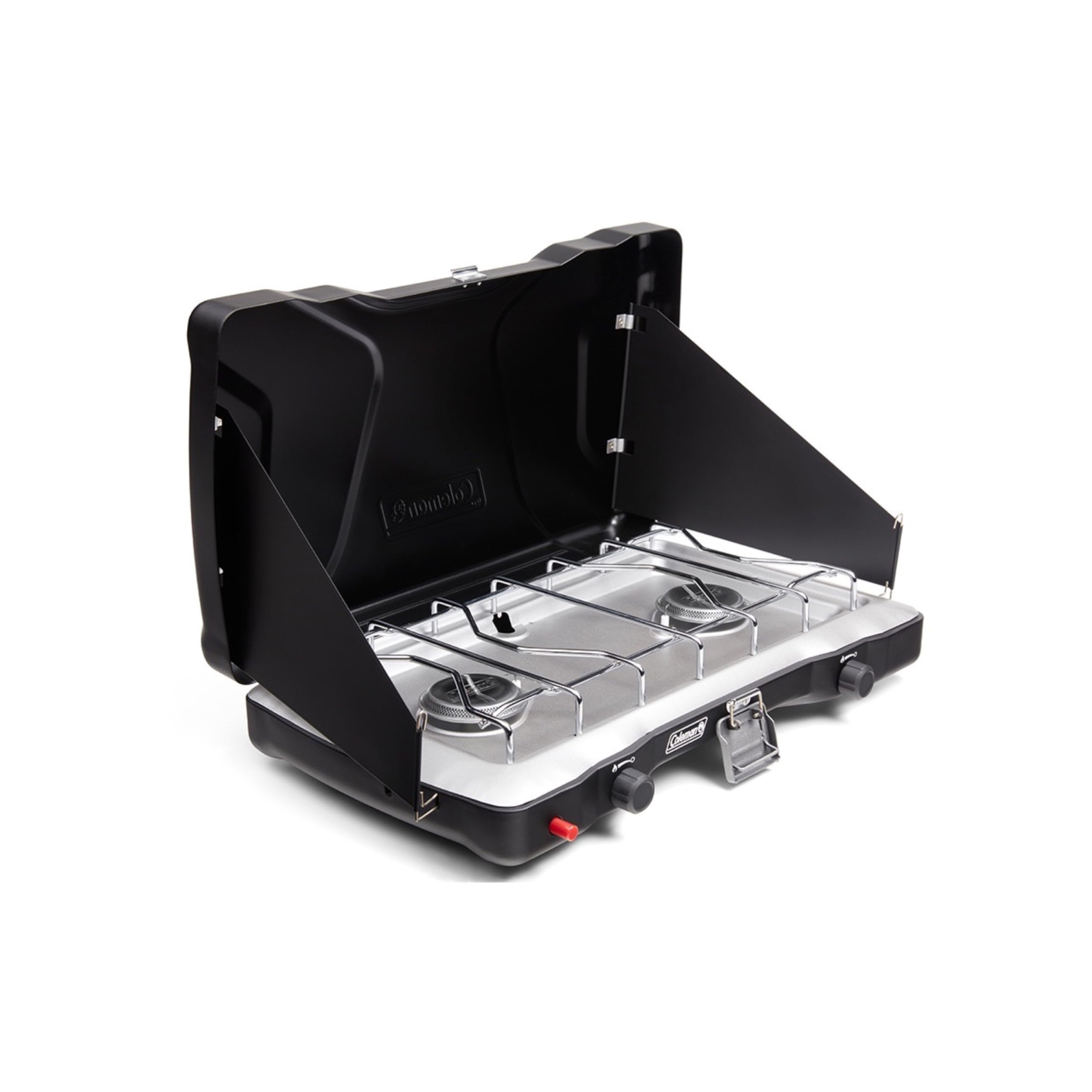
This reliable camping stove delivers consistent performance with easy setup and impressive heat output, making it a solid choice for most outdoor cooking needs.
Pros
- Push-button ignition starts reliably without matches or fuss
- Dual wind guards effectively protect flames from gusty conditions
- Lightweight design with built-in handle makes transport effortless
Cons
- Chrome grates can become slippery when wet or greasy
- Single propane cylinder provides limited cooking time on high heat
- Burner adjustment knobs require careful handling to maintain precise control
We found the Triton+ remarkably straightforward to set up during our recent camping trips. The stove unfolds quickly and locks securely into position with minimal effort required.
Both burners delivered consistent heat distribution across our cookware. We appreciated how the independent controls allowed us to simmer beans on one side whilst grilling sausages at higher temperatures on the other.
The wind guards proved their worth during blustery evenings at our lakeside campsite. Our flames stayed steady even when neighbouring campers struggled with their exposed burners.
Cleaning proved simple thanks to the removable grates. We simply lifted them off and scrubbed away grease and food residue with ease after each meal.
The compact folding design impressed us most when packing up. It fits neatly into our car boot alongside other camping gear without dominating valuable storage space.
Coleman Classic 3-Burner Stove

This reliable three-burner camping stove delivers excellent cooking power and stability, making it ideal for groups who need substantial cooking space at their campsite.
Pros
- Generous cooking surface accommodates multiple large pans simultaneously
- Wind-blocking panels double as convenient side tables for food preparation
- Consistent flame control across all three burners with reliable ignition
Cons
- Substantial weight makes it less suitable for backpacking adventures
- Centre burner distributes heat less evenly than the outer two
- Propane consumption is quite high when running all burners on maximum
We’ve found this stove transforms camp cooking from a chore into something genuinely enjoyable. The generous cooking area means we can prepare bacon, eggs, and beans all at once without juggling pans.
Those wind guards prove their worth on blustery mornings, keeping flames steady whilst providing extra workspace when folded down. The push-button ignition works reliably, though we always carry matches as backup.
Heat distribution impresses us on the outer burners, creating even browning across large frying pans. However, the middle burner tends to concentrate heat in the centre, requiring more attention when cooking delicate items.
Build quality feels robust after numerous camping trips, with no wobbling or loose connections. The compact folding design fits neatly into most car boots, though the 8.5kg weight means it’s definitely a car camping solution rather than a hiking option.
Coleman Cascade 2-Burner Camping Stove

We recommend this stove for campers who want versatile cooking options and reliable performance, though it’s quite heavy for backpacking.
Pros
- Exceptional control for simmering delicate sauces and cooking at precise temperatures
- Cast-iron grill and griddle accessories transform it into a proper outdoor kitchen
- Sturdy construction with secure latching system for safe transport
Cons
- Weighs 27.6 pounds, making it impractical for hiking or backpacking trips
- Wind guards help but don’t completely eliminate flame disturbance in gusty conditions
- Cast-iron accessories require more maintenance to prevent rust
After several camping weekends with this stove, we found the matchless ignition works reliably every time. The rotary system lights burners instantly without fumbling for matches in windy conditions.
Temperature control impressed us most during our testing. We successfully simmered pasta sauces on the lowest setting without scorching. The improved knob rotation gives precise control that many camping stoves lack.
Setting up takes minutes thanks to the recessed carry handle and organised storage. Everything stays secure during transport with the heavy-duty latch system. The nylon carry case keeps accessories organised and protected.
Cooking capacity handles large groups well. We cooked for eight people using both 12-inch and 10-inch pans simultaneously. The 24,000 BTUs provide plenty of power for boiling water quickly and searing meat properly.
Cleaning proved straightforward after messy bacon breakfasts. The removable cast-iron pan supports and aluminised steel cooktop wipe down easily. However, the cast-iron grill and griddle need proper seasoning and care to maintain their condition.
Buying Guide
When selecting a camping stove, we need to consider several key factors that will determine which model best suits our outdoor adventures. The fuel type ranks as the most critical decision point.
Fuel Types and Performance
Gas stoves offer convenience and consistent heat output. They ignite quickly and provide precise flame control for cooking. Liquid fuel stoves work better in cold weather and at high altitudes, making them ideal for winter camping.
Multi-fuel stoves provide versatility but often cost more. Wood-burning stoves eliminate fuel costs entirely but require dry wood availability.
Essential Features to Consider
| Feature | What to Look For |
|---|---|
| BTU Output | Higher BTUs mean faster boiling times |
| Weight | Consider total weight including fuel |
| Wind Resistance | Look for windshields or enclosed designs |
| Pot Compatibility | Ensure your cookware fits securely |
| Simmer Control | Important for proper cooking control |
Size and Portability Factors
We should match stove size to our group size and cooking needs. Single-burner stoves work well for solo camping or simple meals. Two-burner models suit larger groups or complex cooking.
Canister stoves pack smaller but limit fuel capacity. Liquid fuel stoves often fold compactly but require separate fuel bottles.
Durability and Maintenance
Construction quality affects longevity in harsh conditions. Stainless steel components resist corrosion better than aluminium. Simple designs typically require less maintenance and offer fewer failure points during extended trips.
Consider spare parts availability and cleaning requirements before purchasing.
Frequently Asked Questions
Choosing the right Coleman camping stove involves understanding key specifications like BTU output, fuel type, and burner configuration. Performance comparisons between different models often focus on heat efficiency, wind resistance, and cooking surface area.
What features should I consider when choosing a Coleman camping stove?
We recommend evaluating BTU output first, as this determines cooking power. Most Coleman stoves range from 7,500 BTUs for single burners to 22,000 BTUs for dual-burner models.
Wind resistance features matter significantly for outdoor cooking. Look for models with windshields or wind-blocking designs that maintain consistent flame performance in breezy conditions.
Fuel compatibility affects convenience and cost. Coleman stoves typically use either disposable propane canisters or refillable propane cylinders, with some models accepting both types.
How do the Coleman Cascade models compare to the Camp Chef Everest 2X in terms of performance?
Coleman Cascade stoves typically produce 11,000 BTUs per burner with adjustable heat control. The Camp Chef Everest 2X delivers 20,000 BTUs per burner, offering significantly more cooking power.
Wind resistance differs between these models. The Everest 2X features better wind protection with enclosed burner design, whilst Coleman Cascade models rely on basic windscreens.
Build quality varies as well. Camp Chef units generally use heavier gauge steel construction, whereas Coleman Cascade models prioritise lightweight portability for backpacking.
What is the most efficient single burner stove for solo camping trips?
The Coleman Fyrestorm PCS delivers 11,000 BTUs with excellent fuel efficiency for solo use. Its pressure control system maintains consistent output even in cold weather conditions.
Weight considerations make the Coleman Bottle Top stove attractive at just 5.6 ounces. This model screws directly onto disposable propane cylinders without additional connectors or hoses.
We find the Coleman Peak1 Apex offers the best balance of efficiency and cooking surface area. Its 10,000 BTU output heats quickly whilst the wide base accommodates larger pots and pans.
Which Coleman stove is recommended for use in a campervan setting?
Coleman Cascade 222 works well for campervan installations due to its compact dual-burner design. The 11,000 BTUs per burner provide sufficient power for cooking meals inside confined spaces.
Ventilation requirements favour models with lower profiles and controlled flames. The Coleman Partner Steel Stove offers excellent stability and contained cooking suitable for van life setups.
We suggest avoiding high-BTU models in campervans as they generate excessive heat buildup. The Coleman Classic Propane Stove provides adequate 20,000 total BTUs without overwhelming small interior spaces.
What are the key differences between portable and stationary Coleman camping stoves?
Portable models feature folding legs, carrying handles, and lightweight construction for easy transport. These stoves typically weigh between 5-15 pounds and pack into compact storage sizes.
Stationary models prioritise cooking performance over portability. They often include larger cooking surfaces, higher BTU outputs, and more robust construction materials.
Fuel connections differ significantly between types. Portable stoves usually connect to small disposable canisters, whilst stationary models accommodate larger refillable propane tanks for extended use.
How do I maintain and clean my Coleman camping stove to ensure longevity?
Regular cleaning prevents grease buildup that can clog burner ports and affect flame quality. We recommend cleaning the drip tray and cooking grates after each camping trip using warm soapy water.
Burner maintenance requires checking for blocked holes using a small wire or toothpick. Clear any debris from the gas ports to maintain even flame distribution across the cooking surface.
Storage preparation involves disconnecting fuel sources and ensuring all components are completely dry. We store our Coleman stoves in dry locations away from temperature extremes to prevent component degradation.